

Two ads stay on screen for two seconds. One appears between videos in a feed. The other reaches someone building a shopping list. A report may give both the same score. For a brand, they are different contacts.
Time alone does not show the value of attention. Place, the user’s task and distance from purchase matter too.
Two conditions for contact
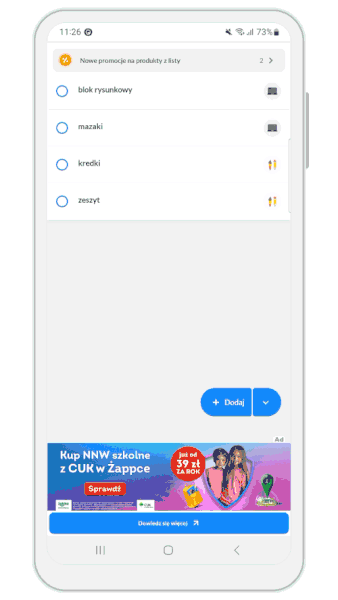
The banner sits on the shopping list. It does not cover the list or the add button.
 Yahoo News
 MSN
MSN
 New York Post
Ads, headlines, menus and new blocks share one feed. A user can scroll past them in a second.
What are attention metrics?
Attention metrics estimate whether a person noticed an ad and how long it held them. They add context to impressions, reach and viewability.
An impression confirms delivery. Viewability says the ad had a chance to appear. Attention measurement looks for signs that the user gave it sight, sound or action.
The IAB and MRC guidelines describe four approaches: device and delivery signals, visual or audio tracking, body responses, and panels or surveys. Each covers a different part of attention.
Five different questions
Attention does not replace sales, brand lift or ROAS.
Attention has a shared framework, but no single score
In November 2025, IAB, MRC and CIMM published final guidelines shaped by more than 200 experts. The document sets common terms, disclosure rules and ways to validate methods. It does not turn attention into one media currency.
A shared framework
The framework treats attention as an added signal. Buyers still need to connect it with delivery, context and business outcomes. The IAB Europe guide makes the same point across European markets.
Context matters in retail media
In retail media, the user has a goal: find a product, check an offer, build a list or plan a store visit. The ad appears during a shopping task.
Listonic users add products and return to the list before shopping and in store. A brand reaches them as a need turns into a plan. That is useful context, not proof of attention.
A brief contact may be enough for a known brand. A new product may need more time. Format, creative, category and campaign goal change the value of the same second.
Exposure time also depends on the refresh rate, meaning how often a placement may swap the creative. In Listonic ads it is 30 seconds by default, so an ad has a real chance to be noticed. The more frequent the refresh, the shorter a single contact and the harder it is to earn attention.
How should a shopping app measure attention?
Join three data layers:
- Valid delivery: check viewability and filter invalid traffic.
- Attention signal: use a method that fits the format, such as a banner or video with sound.
- Action after contact: track an add-to-list, offer view or return visit.
A sound control group shows whether the ad changed behaviour. Without it, natural demand can look like campaign impact.
One attention score can hide too much
One score works well for large agencies. It fits in a spreadsheet, ranks channels and supports media buying. For a client, that ease can hide the facts: the same score may describe very different contacts.
Example: different contacts, the same score
A common number can work as a first filter. The client should also see the format, type of attention, moment of contact and next signal. A standard should make terms clear, not strip away context.
Attention close to purchase can drive strong results
Attention metrics help separate a delivered contact from one that was noticed. Retail media add the user’s moment and intent.
Kamil Janiszewski
In Listonic, a test can link attention with an add-to-list, a return to the offer and the next action. Set the signals and success threshold before the campaign, then compare the result with a control group.
We will report:
- ROAS estimation,
- brand lift based on our own Brand Performance study,
- incremental growth in product additions to lists.